Cheque Bounce Case – Meaning, Section 138, Legal Process & Punishment (Complete Guide)
Introduction
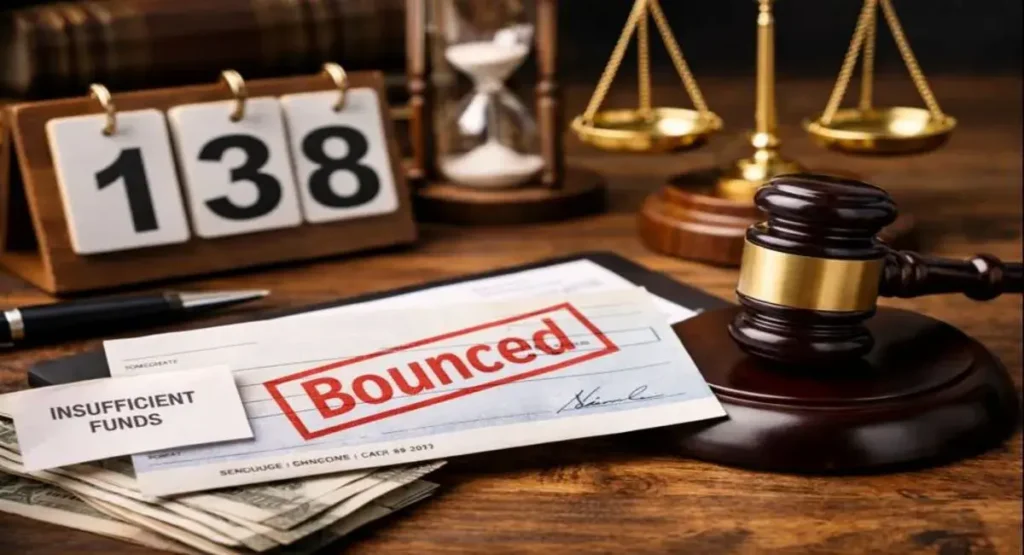
In today’s financial transactions, cheques are widely used. However, many people face serious legal trouble due to cheque bounce, check bounce case, or bounced cheque issues.
If a cheque is dishonoured, it may lead to criminal liability under Section 138 of the Negotiable Instruments Act, 1881.
This article explains cheque bounce meaning, check bounce case process, legal notice, time limits, punishment, and cheque bounce charges in simple language.
What is Cheque Bounce? (Cheque Bounce Meaning)
A cheque bounce occurs when a bank refuses to honour a cheque and returns it unpaid. This situation is commonly referred to as:
- Cheque Bounce
- Check Bounce
- Bounced Cheque
- Bouncing of Cheque
Common Reasons for Cheque Bounce
- Insufficient funds in the bank account
- Signature mismatch
- Account closed
- Expired or post-dated cheque
- Overwriting or damaged cheque
When this happens, the bank issues a Cheque Return Memo stating the reason for dishonour.
Is Cheque Bounce a Criminal Offence?
Yes. A cheque bounce case is a criminal offence under Section 138 of the Negotiable Instruments Act, 1881, provided certain legal conditions are fulfilled.
Conditions for Section 138 Cheque Bounce Case
For a check bounce case to be valid under Section 138:
- The cheque must be issued for a legally enforceable debt or liability
- The cheque must be presented to the bank within 3 months
- The cheque must be returned unpaid
- A legal notice must be sent within 30 days of cheque bounce
- The drawer must fail to pay the cheque amount within 15 days of receiving notice
If all conditions are satisfied, a cheque bounce case can be filed in court.
Cheque Bounce Case Legal Process (Step-by-Step)
Step 1: Cheque Dishonour
The bank returns the cheque with a return memo.
Step 2: Legal Notice
The payee sends a legal demand notice within 30 days.
Step 3: Waiting Period
The drawer gets 15 days to make payment.
Step 4: Filing the Case
If payment is not made, a cheque bounce case is filed before the Judicial Magistrate First Class (JMFC).
Punishment Under Section 138 (Cheque Bounce Case)
If found guilty, the court may impose:
- Imprisonment up to 2 years, or
- Fine up to twice the cheque amount, or
- Both imprisonment and fine
In many cases, courts prefer compensation and settlement over imprisonment.
Cheque Bounce Charges (Bank Charges)
Banks also impose cheque bounce charges, which vary depending on the bank:
- ₹150 to ₹750 per bounced cheque
- Charges are deducted from the account holder
- Negative impact on credit score
Defences Available in a Cheque Bounce Case
An accused can defend a check bounce case on grounds such as:
- Cheque was given as security
- No legally enforceable debt existed
- Improper or invalid legal notice
- Forged signature
- Case filed beyond limitation period
Cheque Bounce Case Time Limits
| Legal Stage | Time Limit |
|---|---|
| Cheque presentation | 3 months |
| Legal notice | Within 30 days |
| Payment after notice | 15 days |
| Filing complaint | Within 30 days |
Frequently Asked Questions (FAQs)
What is cheque bounce?
Cheque bounce means dishonour of a cheque due to insufficient funds or other technical reasons.
How long does a cheque bounce case take?
Usually 6 months to 2 years, depending on court workload and evidence.
Can a cheque bounce case be settled?
Yes, cheque bounce cases can be settled through compromise or mediation.
Can arrest warrant be issued in cheque bounce cases?
Yes, if the accused fails to appear before the court.
✍️ Author & Legal Consultant
Adv. Atul L. Devkar
B.Com, LL.B, GDC
📍 Office Address:
Near Songirwadi Post Office,
Wai – Taluka Wai,
District Satara, Maharashtra
⚖️ Legal Consultation Charges:
₹1,000/- only
📲 Contact (WhatsApp Messages Only):
Mobile:
9920513093
Conclusion
A Cheque Bounce Case is a serious legal matter that can lead to criminal consequences under Section 138. Both cheque issuers and recipients must act carefully and follow legal timelines strictly. Early legal advice can help avoid severe punishment and financial loss.
-

आई कर्ज योजना 2025: महिलांना 15 लाखांपर्यंत बिनव्याजी कर्ज | संपूर्ण माहिती व अर्ज प्रक्रिया
आई कर्ज योजना 2025 महिलांसाठी 15 लाखांपर्यंत बिनव्याजी कर्ज आई कर्ज योजना 2025 महिलांसाठी 15 लाखांपर्यंत बिनव्याजी कर्ज महाराष्ट्र शासनाने […]
-
The Untold Story of Olive Oatman – The Girl With the Blue Chin Tattoo
The Untold Story of Olive Oatman – The Girl With the Blue Chin Tattoo Introduction In the vast and dangerous […]
-
हरीश राणा प्रकरण: सुप्रीम कोर्टाचा ऐतिहासिक निर्णय, न्यायमूर्ती पारडीवाला झाले भावुक
सुप्रीम कोर्टात भावनिक क्षण: न्यायमूर्ती जे. बी. पारडीवाला यांचे डोळे पाणावले; हरीश राणा प्रकरणात ऐतिहासिक निर्णय भारताच्या न्यायव्यवस्थेत एक अत्यंत […]