
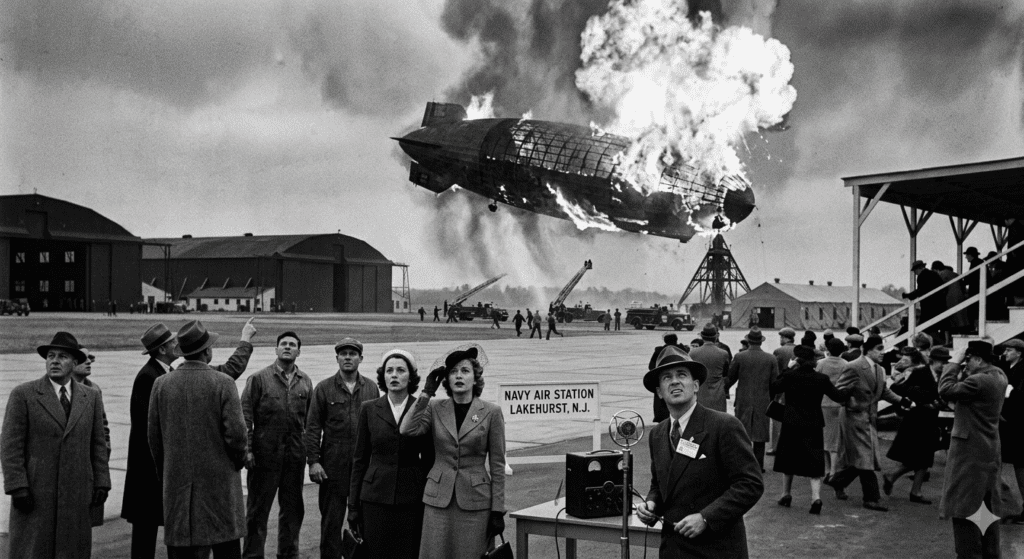
The Hindenburg Disaster: The Airship Tragedy That Shocked the World
Introduction
The Hindenburg disaster remains one of the most shocking aviation disasters in history. On May 6, 1937, the giant German passenger airship suddenly burst into flames while attempting to land in New Jersey, USA. Within seconds, the massive airship was destroyed, creating one of the most unforgettable moments in world history.
This tragic event changed the future of air travel safety and marked the end of the golden era of passenger airships.
Table of Contents
The Rise of the Hindenburg Airship
During the early 20th century, airships were considered a luxurious way to travel across the Atlantic Ocean. The Hindenburg was one of the largest flying machines ever built and represented the peak of aviation technology at that time.
Operated by the German Zeppelin Company, the airship was designed to carry passengers between Europe and the United States. With luxurious cabins, dining rooms, and observation decks, it offered an experience similar to a floating hotel in the sky.
For many travelers, flying on the Hindenburg was a symbol of prestige and innovation in international air travel.
The Tragic Night of May 6, 1937
On May 6, 1937, the Hindenburg was approaching the Naval Air Station in Lakehurst, New Jersey, after completing a transatlantic journey from Germany.
Hundreds of spectators gathered on the ground to watch the massive airship land. As the Hindenburg slowly descended toward the landing field, something unexpected happened.
Suddenly, flames appeared near the tail of the airship.
Within seconds, the entire airship caught fire and quickly collapsed to the ground. The disaster unfolded in front of cameras and reporters, making it one of the first major disasters recorded on film and radio broadcast.
What Caused the Hindenburg Disaster?
Even today, the exact cause of the disaster remains a topic of debate among historians and aviation experts.
Some experts believe that a hydrogen gas leak inside the airship may have ignited due to a spark caused by static electricity. Others suggest structural damage or technical failure.
Because the Hindenburg used hydrogen—a highly flammable gas—the fire spread extremely quickly, destroying the airship in less than a minute.
Casualties and Global Reaction
Out of the 97 people on board, 36 people lost their lives, including passengers and crew members. Although the death toll was lower than many other aviation disasters, the dramatic footage of the fire shocked people around the world.
The disaster received global media attention and became one of the most widely reported historical events of the 20th century.
The End of the Airship Era
The Hindenburg disaster effectively ended the era of passenger airships. After the tragedy, public confidence in airship travel declined dramatically.
Airplane technology soon replaced airships as the preferred method for long-distance travel. Today, the Hindenburg disaster is remembered as a turning point in modern aviation safety and transportation history.
Conclusion
The story of the Hindenburg disaster remains a powerful reminder of how quickly technological dreams can turn into tragedy. The dramatic images of the burning airship continue to capture the attention of historians, aviation experts, and history enthusiasts around the world.
Even decades later, the Hindenburg disaster is still considered one of the most unforgettable moments in aviation history.

Ashwini Ghadge is a Common Service Center (CSC) operator with more than 8 years of experience in handling government services and citizen support. She provides reliable information about government schemes, official documents, and public welfare programs. Her goal is to guide citizens in accessing government benefits and understanding important schemes easily.
nice information