
What Is a Reverse Mortgage? Complete Guide for Homeowners (2026)
Introduction
If you’ve ever wondered what is a reverse mortgage, you’re not alone. It’s one of those financial terms that sounds complicated at first, but once you understand it, the concept is actually quite simple—and for some people, very useful.
A reverse mortgage is especially popular among senior homeowners who want to turn their home equity into cash without selling their house. In this detailed guide, we’ll break down what is a reverse mortgage, how it works, its benefits, risks, and whether it’s the right choice for you—all in clear, human-friendly language.
Table of Contents
What Is a Reverse Mortgage? (Simple Explanation)
Let’s start with the basic meaning of what is a reverse mortgage.
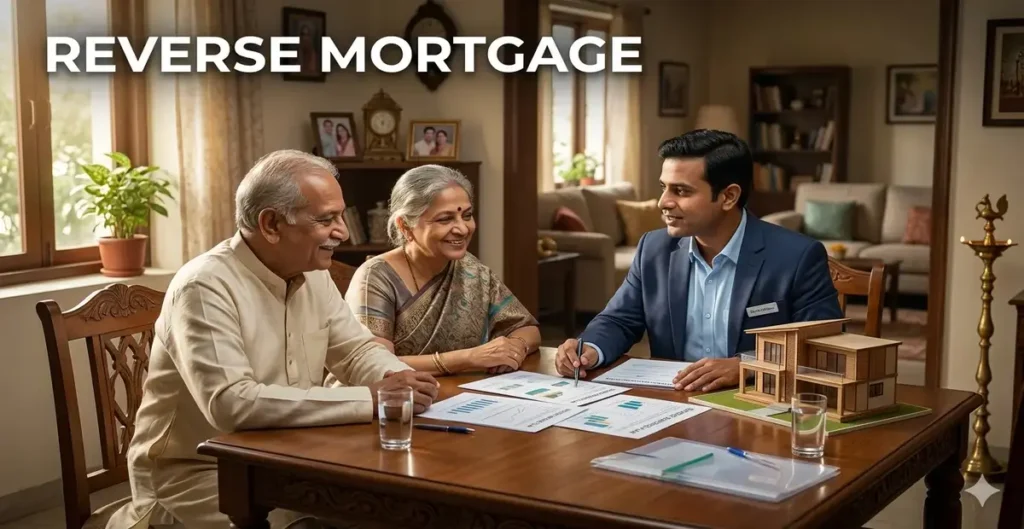
A reverse mortgage is a type of home loan that allows homeowners (usually seniors) to borrow money against the value of their home, without having to make monthly loan payments.
In simple words:
Reverse Mortgage = You get money from your home, instead of paying money to the bank
The bank pays you—either in monthly payments, a lump sum, or a credit line—while you continue living in your home.
How Does a Reverse Mortgage Work?
To fully understand what is a reverse mortgage, you need to know how it actually works.
In a traditional home loan, you pay EMIs to the bank and gradually own the house. In a reverse mortgage, it works the opposite way. The bank gives you money based on your home’s value, and the loan amount increases over time.
You don’t have to repay the loan while you are living in the house. The repayment usually happens when:
- You sell the house
- You move out permanently
- Or after your lifetime (by heirs or through property sale)
Who Can Apply for a Reverse Mortgage?
Eligibility is an important part of understanding what is a reverse mortgage.
Typically, you must:
- Be 60 years or older
- Own a house (self-occupied property)
- Have clear property ownership (no major loans pending)
This makes reverse mortgage mainly suitable for retired individuals.
Types of Reverse Mortgage Payments
When learning what is a reverse mortgage, it’s helpful to know how you receive money:
Monthly Payments
You receive a fixed amount every month, like a pension.
Lump Sum
You get a one-time large amount.
Line of Credit
You can withdraw money as needed.
The option depends on your needs and lender terms.
Advantages of Reverse Mortgage
Understanding what is a reverse mortgage also means looking at its benefits.
One of the biggest advantages is financial independence. Retired individuals can generate income without selling their home.
It also allows you to stay in your own house, which is emotionally important for many people. There are no monthly EMI payments, which reduces financial pressure.
For people with valuable property but low income, this can be a practical solution.
Disadvantages and Risks
While exploring what is a reverse mortgage, it’s important to look at the downsides too.
The biggest concern is that the loan amount keeps increasing over time, reducing the equity left in the property.
Also, after the borrower’s lifetime, the house is usually sold to repay the loan, which means heirs may not inherit the full property.
There can also be processing fees, interest costs, and strict conditions from lenders.
Reverse Mortgage vs Home Loan
Many people confuse this while searching what is a reverse mortgage. Here’s a simple comparison:
| Feature | Home Loan | Reverse Mortgage |
|---|---|---|
| Payment Direction | You pay bank | Bank pays you |
| Age Group | Any eligible buyer | Mostly 60+ |
| Ownership | You gain ownership | You already own home |
| Repayment | Monthly EMIs | After sale or lifetime |
How Much Money Can You Get?
Another important aspect of what is a reverse mortgage is the loan amount.
The amount depends on:
- Property value
- Age of borrower
- Interest rates
- Lender policies
Usually, you can get 40% to 70% of the property value.
Interest Rates and Charges
Like any loan, reverse mortgages also have interest rates.
While learning what is a reverse mortgage, remember:
- Interest is added over time
- No monthly payment is required
- Final repayment includes principal + interest
When Does the Loan End?
Understanding what is a reverse mortgage also includes knowing when it ends.
The loan becomes due when:
- The borrower passes away
- The property is sold
- The borrower moves out permanently
At that point, the bank recovers the loan amount.
Is Reverse Mortgage a Good Idea?
This is one of the most common questions related to what is a reverse mortgage.
It can be a good option if:
- You are retired and need regular income
- You own a valuable property
- You don’t want to sell your house
However, it may not be ideal if:
- You want to leave the property fully to heirs
- You have other income sources
It’s always better to consult a financial advisor before deciding.
Common Mistakes to Avoid
While understanding what is a reverse mortgage, avoid these mistakes:
- Not understanding long-term impact
- Ignoring interest accumulation
- Not discussing with family
- Choosing wrong payout option
FAQ – Frequently Asked Questions
Q1. What is a reverse mortgage in simple words?
A reverse mortgage is a loan where the bank pays you against your home’s value instead of you paying EMIs.
Q2. Do I lose ownership of my house?
No, you continue to own and live in your house.
Q3. Is reverse mortgage available in India?
Yes, some banks in India offer reverse mortgage schemes for senior citizens.
Q4. Can heirs keep the property?
Yes, by repaying the loan amount.
Q5. Is reverse mortgage taxable?
Generally, the amount received is not treated as income, but rules may vary.
Conclusion
Now you clearly understand what is a reverse mortgage and how it can be a useful financial tool for senior homeowners. It allows you to unlock the value of your home without selling it, providing financial support during retirement.
However, it’s not a one-size-fits-all solution. Carefully evaluate your needs, long-term goals, and family situation before making a decision.
